
Blog


Construction Equipment Management: Integrated ERP vs. Bolt-On Software
For many contractors, equipment is the largest capital investment on the balance sheet after people. Excavators, loaders, cranes, trucks, generators, and small tools represent millions of dollars in...

Tariff Refunds Are Moving. Can Your Data Keep Up?
The tariff story changed. Your books may not have. Distribution leaders: on October 6, U.S. Customs opened the third and final phase of its IEEPA tariff refund process. For most of 2025, tariff...

Brewery Software vs. ERP: Choosing the Right System for Breweries & Distilleries
Most breweries and distilleries begin with whatever gets product out the door: a brewhouse scheduling tool, a spreadsheet for excise calculations, accounting software for the books, and a separate...

Your ERP Already Promises to Solve Seasonal Demand. Here’s the Part It Skips.
Every HVAC distributor has heard some version of the pitch: your ERP handles seasonality, your reorder points adjust, the system "learns" your season. It's on the industry page of every major ERP...

The Data-Center Boom Is Arriving Just as Your Most Experienced People Are Leaving
A few days ago, we wrote about what it takes to carry a data-center contract without it breaking your operation. We talked about the long-lead materials, the staged deliveries, the branch-to-branch...

The Data Center Boom Could Make Your Business… Or Break It
The call comes in on a Tuesday afternoon. A contractor working a data-center build wants a quote for switchgear, generators, transformers, miles of cable, chillers and cooling loops, and the...

Chemical & Life Sciences ERP Features: Formulation, Batch Traceability & Compliance
Chemical and life sciences manufacturers operate under a level of regulatory scrutiny and formulation complexity that most general-purpose ERP systems were never designed to handle. Every batch...

Clean Data Beats Another AI Tool and I’ll Tell You Why
Two distributors buy the same pricing engine. A year later, one is running quotes off it and the other stopped opening the dashboard. Distribution Strategy Group (DSG), the research firm behind this...
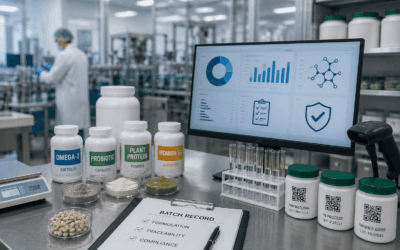
Nutraceuticals ERP Features: Formulation, Traceability & Compliance
The nutraceuticals and functional foods sector sits at the intersection of food manufacturing and pharmaceutical-grade quality expectations. Consumers want proof of potency, purity, and provenance;...

The 77-Point Gap: Why Most Distributors’ AI Strategy Is Still a PowerPoint Slide
You Told the Board AI Was a Priority, So Did 93% of Your Peers. Only 16% Meant It. Ninety-three percent of wholesale distribution executives now call AI a strategic priority. That figure comes...

Why WIP Reporting Breaks Down in Construction – and How to Fix It
Every construction company with active bonding capacity knows the drill: at some point every month or quarter, someone has to produce a Work-in-Progress (WIP) schedule - a report showing percent...

Nominations Close September 4: A Deeper Look at Distribution ERP
The Epicor Distribution Leadership Summit is closing in fast and the window to nominate your team closes September 4. The event itself runs November 9–11 at the Gaylord Texan in Grapevine, TX. Most...
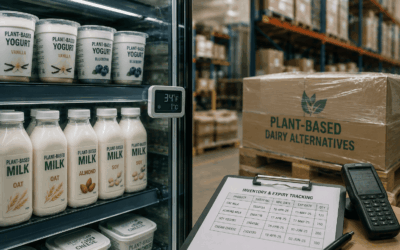
Shelf-Life & Spoilage Risk in Plant-Based Dairy: Fixing Inventory & Distribution
Plant-based dairy alternatives - oat, almond, soy, pea, and coconut-based milks, creamers, and yogurts - are among the fastest-growing categories in the beverage and dairy case. But growth has...

You Don’t Need More Staff. You Need Fewer Spreadsheets.
You didn't start a distribution company to become an expert in spreadsheet reconciliation. Unfortunately, that's where most nights end up without an ERP that fits what you do. Now you’re spending...

Cloud vs. On-Premise ERP for Bottled Water & Beverage Manufacturers
Bottled water and water treatment beverage manufacturers operate in one of the most tightly regulated, margin-sensitive corners of the F&B industry. Water sourcing, treatment, filtration,...

Five Working Days to Answer a Recall. How Long Would It Actually Take You?
The manufacturer calls on a Tuesday to tell you Lot 88-4402 is being recalled, and they need to know where every unit went. The answer exists somewhere. The units that shipped clean are in the ERP,...

AMS vs. In-House ERP Support: Which Is Right for Your Business?
At some point after go-live, every ERP-driven organization faces the same operational question: who keeps this system running day after day? The instinct for many businesses is to build an internal...

Hazardous Material & Multi-UOM Management ERP for Chemical Manufacturers
Two Kinds of Complexity, One Inventory Record Chemical and life sciences manufacturers manage a form of inventory complexity that few other industries face in combination. Raw materials and...

3 Questions Fluid Power Distributors Should Ask Before Switching ERPs
If you're a fluid power distributor dealing with hydraulics, pneumatics, pumps, AKA the whole supply chain that keeps industrial equipment moving, you know your operation doesn't run like a generic...

Multi-UOM Bulk-to-Retail Conversion ERP for Spice Manufacturers
Why Bulk-to-Retail Conversion Is Harder Than It Looks Spice and seasoning manufacturers live in two units of measure at once. Raw material arrives and is processed in bulk - kilograms, pounds, or...

You Won the Job. Did You Make Money on It?
The machine shipped in June and is running at the customer's plant. It passed acceptance and the final invoice cleared. By every measure that shows up in a status meeting, it was a good job. Now to...

Why Retail Returns Are Draining Profitability – and How ERP-Driven Reverse Logistics Fixes It
The Return You Don't See Coming Every retailer plans for sales. Far fewer plan, with the same rigor, for what happens after a customer decides to send something back. Returns have quietly become...

When the Recall Notice Arrives, How Long Does Your Trace Take?
The notice comes in at 3:40 on a Friday. A manufacturer is pulling a lot of sterile procedure trays with one lot code, a date range, and a request. The request is that you identify and quarantine...
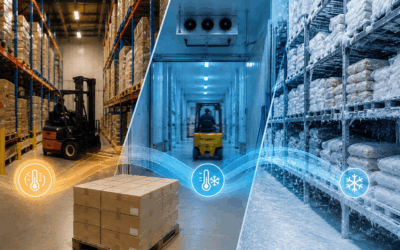
Multi-Temperature Warehouse ERP for Frozen Food Manufacturers
One Warehouse, Three Temperature Worlds Most frozen food manufacturers assume their biggest operational challenge is the freezer. In practice, the freezer is only one-third of the problem. Raw...
The Hidden Cost of Manual Compliance Tracking in Medical Device Manufacturing
It's Thursday afternoon and a customer is waiting on a lot release. Your quality engineer is standing at a filing cabinet with a half-signed device history record, trying to establish whether the...

Choosing the Right ERP for Construction: Project-Based vs. Service-Based Work
Many construction firms no longer fit neatly into a single operating model. A general contractor running large capital projects may also maintain a growing service division handling warranty...
Replacing an End-of-Life ERP in Machinery Manufacturing: What to Require From the Next System
You already know the symptoms. The ERP running your plant hasn't had a meaningful update in years. The person who built your customizations retired, and nobody left on staff can safely touch them....

Formula & Recipe Management for Beverage Manufacturers: Spreadsheets vs. ERP-Native
Most beverage manufacturers didn't set out to run formula and recipe management on spreadsheets forever. It started as a stopgap - a quick way to document a juice blend ratio, a carbonation level,...

Why Are Industrial Distributors Competing With Amazon Business? What the Right ERP Has to Do With It
Somewhere in your customer list, a purchasing manager placed an order late last night. The open question is whether or not they placed it with you. If your branch was closed, your webstore couldn't...

Equipment & Asset Management in Acumatica for Construction Companies
Heavy equipment is often the second-largest cost on a construction project after labor - and one of the least understood. An excavator sits idle on one site while a project manager across town...