
Acumatica ERP for Snacks & Packaged Foods: Mastering Variable Packs, Co-Packing, and Promotional SKUs
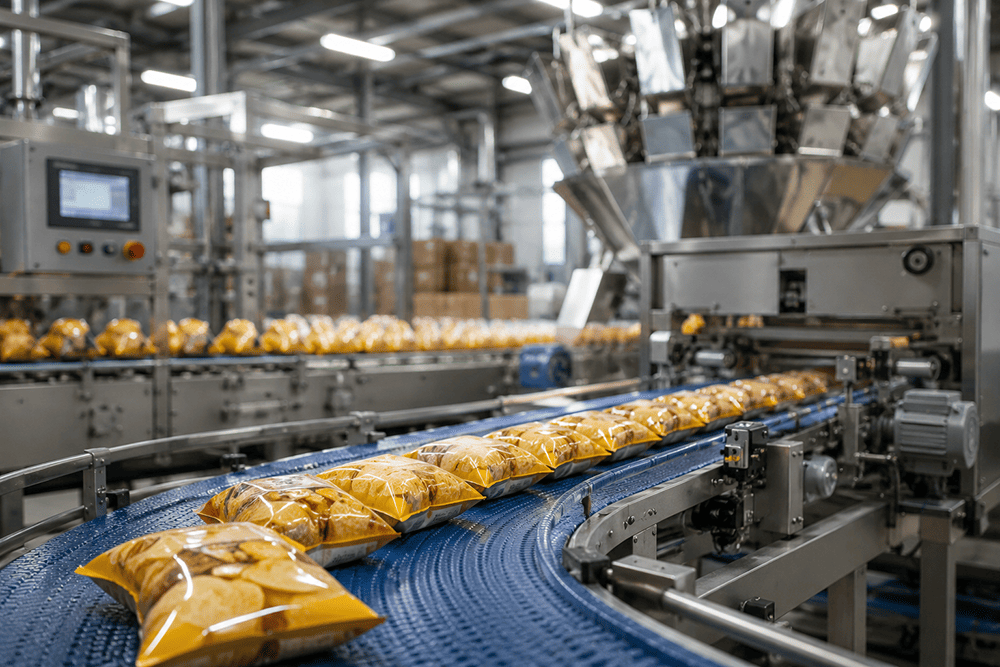
A bag of chips looks simple sitting on a retail shelf. Behind it is a web of operational complexity that most snack and packaged food manufacturers manage with a patchwork of spreadsheets and disconnected systems: dozens of pack size variants, contract co-packers producing on your behalf, private label runs for multiple retailers, and seasonal promotional bundles that appear and disappear from the line-up every quarter. When that complexity isn’t captured in a single system of record, the results are predictable – shipments that don’t match invoiced weight, co-pack costs that get buried in the wrong general ledger account, promotional SKUs that nobody remembers to retire, and recalls that take days instead of minutes to trace. Finance ends up reconciling numbers after the fact instead of trusting them in real time, and operations makes packaging and sourcing decisions on gut feel because the data that should inform them is scattered across five different files. This post is a feature deep-dive into how Acumatica ERP, properly configured for snack and packaged food manufacturing, addresses each of these problems directly – and what that looks like in day-to-day operations rather than just in theory.
The Hidden Complexity Behind Every Package
Snack and packaged food companies rarely make just one thing. A single product line might ship as a single-serve bag, a family size, a club-store multi-pack, and a private-label version for three different retailers – each with its own case configuration, label, and pricing. Natural ingredients like nuts, dried fruit, and jerky introduce weight variance that a fixed-quantity system can’t account for. Add in co-packers who run production on a manufacturer’s behalf and promotional bundles that rotate seasonally, and it’s easy to see why so many finance and operations teams lose visibility the moment volume scales. Left unmanaged in siloed spreadsheets, this complexity quietly erodes margin and slows down decision-making at exactly the moments – a recall, a retailer audit, a demand spike – when speed matters most. It also makes new product launches slower than they need to be: every new pack format or private label variant means another manual workaround layered on top of the last one, and institutional knowledge about how those workarounds fit together tends to live in one person’s head rather than in the system itself.
The manufacturers who manage this well share one trait: they’ve stopped treating pack format, co-packing, and promotions as separate problems handled by separate tools, and instead built a single operational picture that finance, production, and sales all pull from.
Multi-UOM & Catch Weight Management
Many snack and packaged food products are sold by count or case but produced and priced based on actual weight, which naturally varies batch to batch. Acumatica supports multiple units of measure per item along with catch weight tracking at receiving, production, and shipment, so the system captures the real weight shipped rather than a nominal average. That means invoices reflect what actually went out the door, margin isn’t quietly eaten by rounding assumptions, and the business can meet the case-weight tolerance requirements that major retailers increasingly enforce at the dock. Because catch weight data is captured natively in the same transaction flow as inventory and order management, there’s no separate weighing system to reconcile after the fact, and no end-of-month scramble to explain why shipped weight and invoiced weight don’t line up.
This matters most for manufacturers working with variable-weight raw materials – nuts, dried fruit, jerky, cheese-based snacks – where yield can shift meaningfully from batch to batch. With catch weight built into the core transaction flow, that variance becomes visible and manageable instead of a source of recurring, unexplained margin leakage.
Co-Packing & Contract Manufacturing Visibility
Outsourcing production to a co-packer or running private label lines for a retailer shouldn’t mean losing visibility into that production. Acumatica’s production management and subcontracting functionality lets manufacturers track raw materials and packaging shipped to a co-packer, monitor work-in-process at the contract facility, and receive finished goods back into inventory with full cost allocation – all inside the same system used for in-house production. Quality holds, partial shipments, and yield variances at the co-packer show up as visible, actionable data rather than a monthly reconciliation exercise. For finance, this means toll manufacturing and private label arrangements get costed accurately at the job or production order level, instead of landing as a lump entry that obscures true product profitability.
This level of visibility also changes the nature of the co-packer relationship itself. Instead of waiting for a monthly invoice and reconciling it against expectations after the fact, operations teams can see co-pack production status in near real time – what’s been shipped to the facility, what’s in process, and what’s ready to ship back – which shortens the feedback loop when something needs to be corrected mid-run rather than after the fact.
Kitting, Bundling & Promotional SKU Management
Holiday variety packs, gift assortments, and limited-time promotional bundles are a core part of the snack and packaged food playbook – and a common source of inventory chaos. Acumatica’s kitting and bill-of-materials functionality allows a promotional SKU to be built from existing inventory components without duplicating stock records. When a variety pack sells, the system automatically relieves the correct component inventory and applies accurate landed cost to the bundle, so margin reporting on promotional items is just as reliable as on core SKUs. Just as importantly, promotional SKUs can be activated for a defined season and deactivated afterward with full audit history, so nothing lingers in the catalog as a stale, mispriced item six months after the campaign ends.
This is where many manufacturers lose the most margin without realizing it: a promotional bundle assembled by hand outside the ERP, costed with rough assumptions, and never fully reconciled back to component-level actuals. Managing kits natively closes that gap and gives sales and finance the same, accurate picture of promotional profitability.
End-to-End Lot Traceability Across Packaging Runs
Full genealogy tracking – from raw ingredient lot, through blending and packaging, to case, pallet, and final customer shipment – is no longer optional for food manufacturers; it’s expected by retailers, auditors, and regulators alike. Acumatica captures lot and batch data at every stage of the packaging run, so a single query can trace forward from an ingredient lot to every finished case it touched, or backward from a customer complaint to the exact production run and shift. In a recall scenario, that’s the difference between a targeted, minutes-long response and a costly, company-wide guessing game. Traceability data lives in the same system as production and inventory records, so there’s no lag between when something happens on the floor and when it’s visible to quality and compliance teams, and no need to cross-reference three separate logs to answer a single retailer audit question.
Quality You Can Prove: eWorkplace Apps QMS for Acumatica
Traceability is only half the quality story – manufacturers also need to prove that product met specification before it shipped. eWorkplace Apps’ QMS integration, a native extension built on the Acumatica platform, adds structured quality control workflows directly into the same records used for production and packaging: automated inspection plans triggered at receiving, in-process, and shipping; lot disposition for hold, release, or reject decisions; and CAPA and non-conformance management tied back to the originating batch. Because it’s native to Acumatica rather than a bolt-on system, quality data sits alongside production and inventory data instead of living in a separate application that has to be reconciled after the fact – which means an auditor asking for inspection records on a specific lot gets an answer in the same system, in minutes, rather than a request routed to a separate quality department running separate software.
What to Look for in an Implementation
Not every Acumatica deployment is configured to handle these scenarios out of the box. When evaluating an implementation partner or scoping a project, snack and packaged food manufacturers should look for experience with:
• Catch weight configuration across receiving, production, and shipping – not just at one stage of the process
• Subcontracting and toll manufacturing workflows that reflect how your specific co-packer relationships operate
• Kitting and BOM setups that support seasonal activation and deactivation without leaving orphaned SKUs behind
• Lot traceability configured end to end, from incoming ingredient to outbound shipment, tested against a mock recall scenario
• Native quality management, such as the eWorkplace Apps QMS extension, rather than a disconnected third-party quality system
Getting these pieces right during implementation – rather than retrofitting them later – is what determines whether an ERP rollout actually resolves the complexity described above, or simply moves the same manual workarounds into a new, more expensive system.
Bringing It Together
Variable pack management, co-pack visibility, promotional SKU control, and full lot traceability aren’t separate problems – they’re all symptoms of the same underlying need: one system of record that reflects how snack and packaged food manufacturing actually operates. When these capabilities live inside a single ERP platform rather than a collection of spreadsheets and side systems, manufacturers spend less time reconciling data and more time making decisions – which SKUs to expand, which co-packer relationships are actually profitable, which promotional bundles are worth repeating next season, and how quickly they can respond when something goes wrong on the line. That shift, from reconciling data to acting on it, is ultimately what separates a manufacturer that scales smoothly from one that outgrows its own systems.
Ready to Bring Order to Your Snack or Packaged Food Production Line?
Acuvera Tech helps food and beverage manufacturers implement Acumatica ERP configured for the real complexity of variable packs, co-packing, promotions, and traceability. Talk to our team about what an implementation built for your product lines looks like.