
Epicor Is Ending On-Premise Prophet 21 Updates Here's What That Means for Your Business
And what mid-market distributors need to do before the clock runs out.

If you’re running Prophet 21 on your own hardware, Epicor’s January 2026 announcement changes your timeline whether you’re ready for it, or not.
Epicor officially announced that the final on-premise feature release for Prophet 21 will be May 2028. After that, Active Support runs through June 30, 2029, covering security patches and compliance updates only. Starting July 2029, on-premise P21 customers move to Sustaining Support: no new releases, no security updates, no compliance patches.
For a decision with a 12-to-18-month implementation timeline, it’s time to start planning.
Why This Matters Beyond the Support Dates
The end of on-premise updates compounds into three operational risks that mid-market distributors can’t afford to ignore.
1. Your On-Premise Server Becomes a Security Liability
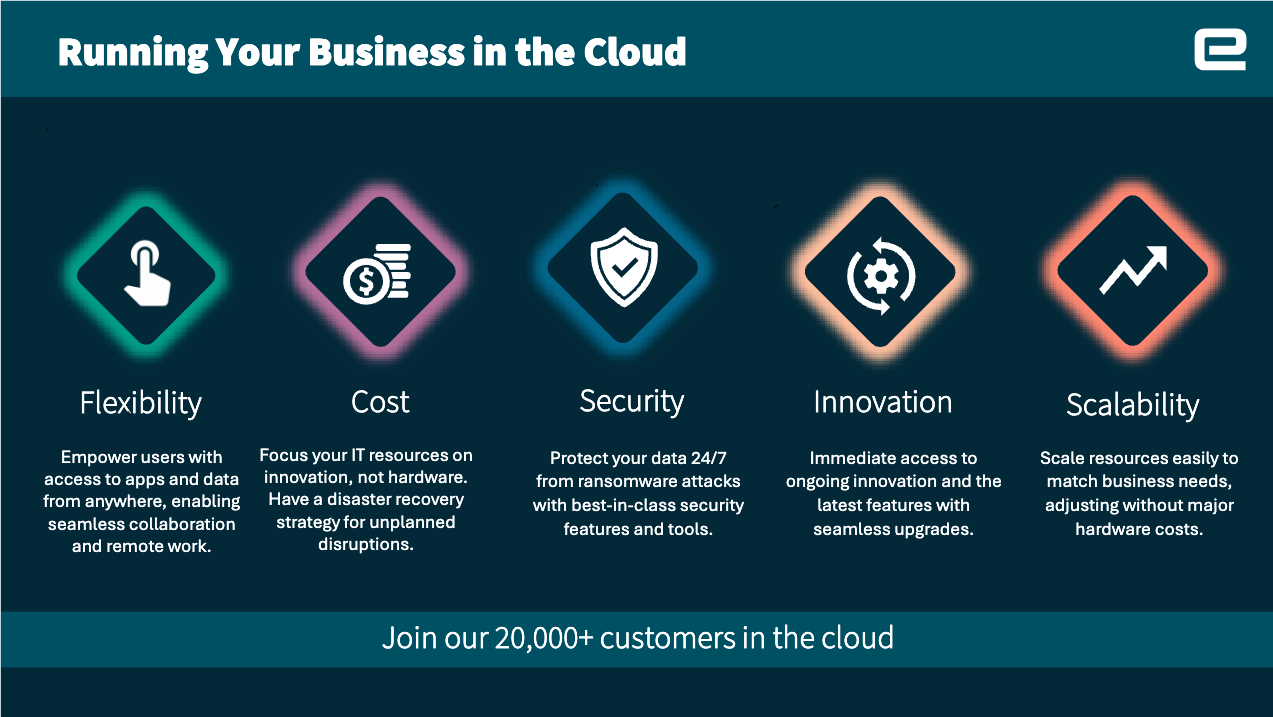
Every month after May 2028 that you’re running an unpatched on-premise P21 instance is a month your ERP sits outside the security perimeter. No new patches means no protection against new vulnerabilities, and mid-market distributors have become a primary target for ransomware and data breaches precisely because they hold valuable supply chain data without enterprise-level security infrastructure.
The Epicor Cloud runs on Microsoft Azure, which means your data inherits enterprise-grade security infrastructure, continuous patching, and threat monitoring that no on-premise server room can replicate. When Epicor pushes a security update, cloud customers get it automatically. On-premise customers, after 2028, won’t get it at all.
2. The True Cost of Staying On-Premise Keeps Climbing
Most distributors underestimate what on-premise ERP actually costs. The server purchase is visible, but the ongoing costs are not. Hardware refresh cycles every three to five years, IT staff to maintain infrastructure, emergency maintenance windows, and the operational cost of downtime when something breaks all add up.
Cloud ERP converts that unpredictable capital expenditure into a predictable operating expense. No more server room. No more hardware refresh. And you can skip the emergency weekend call when the system goes down before a major shipment. For multi-branch distributors managing operations across several states, that operational simplicity compounds quickly.
Running toward an end-of-support deadline also narrows your options. Distributors who wait until 2028 to start the conversation will find themselves choosing between a rushed migration and staying on unsupported software, both of which cost more than a planned transition today.
3. On-Premise Infrastructure Can’t Scale With Your Business
Mid-market distribution growth means new branches, acquisitions, and new customer segments. All of this requires infrastructure that can scale with it. On-premise ERP can’t.
Cloud P21 eliminates that ceiling. New users, new locations, and new data volume all scale without infrastructure projects. And because all future innovation from Epicor, including AI capabilities like Grow AI Item Advisor, which delivers real-time cross-sell recommendations during order entry, will be cloud-only. Staying on-premise locks you out of every competitive capability Epicor builds from here forward.
The Migration Window Is Open Now
P21 cloud migrations for mid-market distributors typically take 12 to 18 months when done properly with data migration, process mapping, staff training, and a controlled go-live. That means the practical deadline to start is now.
Epicor has launched the Ascend with Epicor program to support the transition by offering migration methodology, planning support, and AI tooling to streamline the process. But the program is only as effective as the partner executing it.
How Acuvera Tech Helps
As an Epicor Platinum Partner, Acuvera Tech knows the platform, we know the migration process, and we know the operational complexity that comes with running a multi-site distribution business through a system transition.
We start every migration conversation the same way: a free consultation (on-site or virtual) where we assess your current environment and give you a clear picture of what cloud migration actually looks like for your specific operation.
If you’re on on-premise Prophet-21 and want to understand your options before the window narrows, that conversation starts here.