
AI-Driven Demand Planning for Agriculture: Turning Weather & Market Data Into Forecasts
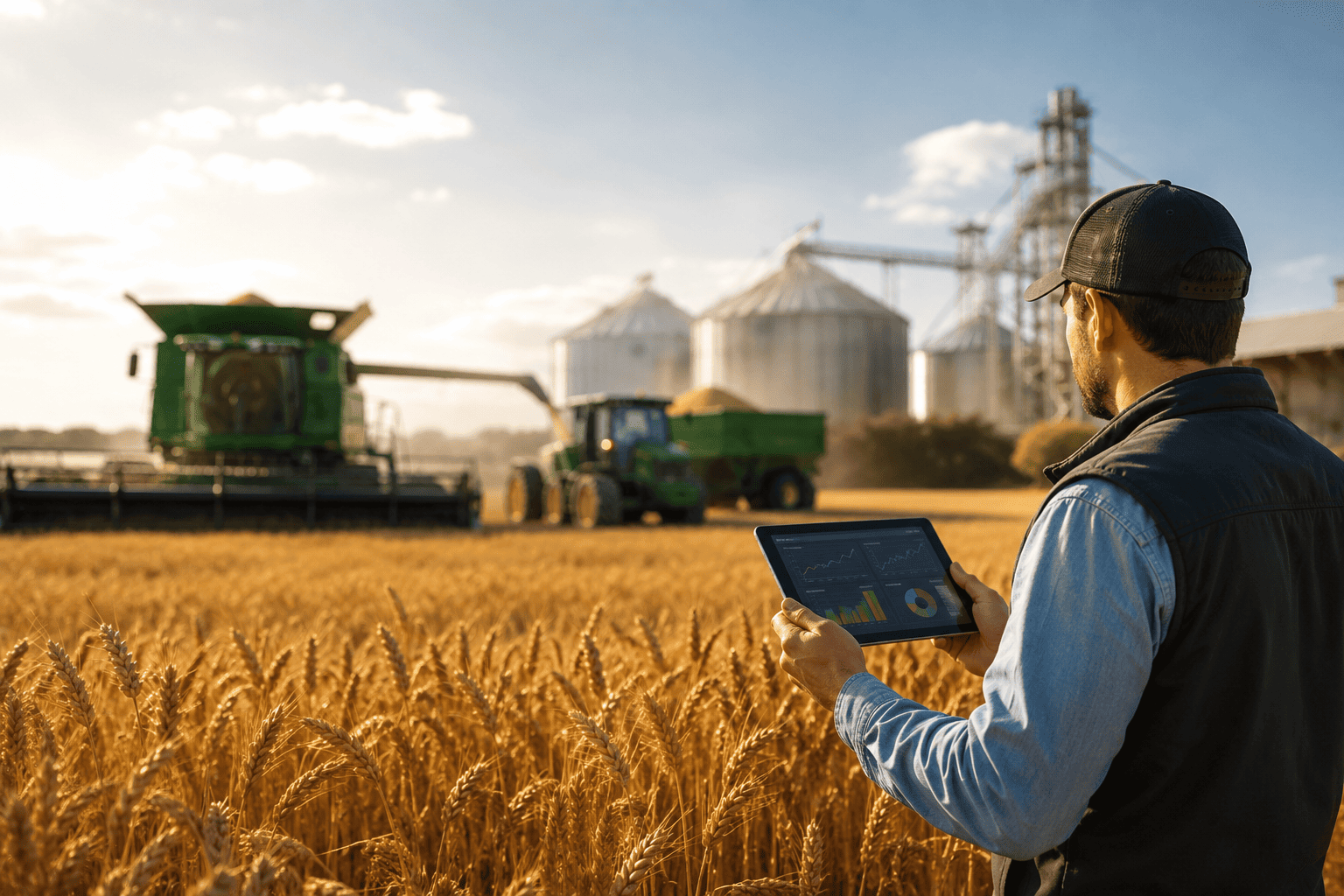
Agriculture lives at the intersection of two forces you cannot control: weather and markets. A late frost decimates a season’s crop. A supply glut crashes commodity prices overnight. Demand from processors or retailers shifts on a quarterly basis. Agribusinesses-whether farming operations, livestock producers, horticulture specialists, or agritech companies-manage their businesses within these constraints, often with tools designed for retail or manufacturing where conditions are more stable and predictable.
That gap between legacy business systems and agricultural reality costs money every season. And it grows wider as agribusinesses scale.
Modern ERP, augmented with artificial intelligence and real-time data connectivity, closes that gap.
The Challenge: Forecasting in an Uncertain Environment
Agribusinesses operate under unique planning constraints:
- Weather variability: Frost, drought, excessive rain, and pest pressure create yield surprises. Traditional forecasts based on historical averages fail when conditions deviate significantly.
- Commodity price volatility: Input costs (feed, seed, fertilizer) and output prices (grain, livestock, produce) fluctuate based on global supply, currency, and policy. Margin planning becomes speculative.
- Seasonal demand swings: Processors, distributors, and retailers demand large volumes during specific windows. Planning outside these windows risks unsold inventory or supply shortages.
- Resource allocation complexity: Land, water, equipment, and labor must be optimized across crops or livestock operations with competing seasonal calendars.
- Regulatory and compliance tracking: Food safety certifications, traceability requirements, environmental permits, and pesticide usage records must be documented and auditable.
Most agribusinesses manage these unknowns with spreadsheets, tribal knowledge, and intuition. It works until it doesn’t.
The Intelligence Layer: AI-Powered Demand Planning
Acumatica ERP for Agriculture introduces a modern planning layer built from the ground up to handle agricultural complexity. At its core is embedded artificial intelligence and machine learning that learns from historical patterns while ingesting real-time data.
Real-Time Data Integration
Modern agribusinesses already collect data from sensors, weather stations, satellite imagery, and farm management apps. The problem is that this data sits isolated. Acumatica connects via open APIs and IoT frameworks, pulling environmental data (soil moisture, temperature, precipitation forecasts) directly into the system. When combined with historical yield records, input costs, and processor orders, this real-time context becomes the foundation for intelligent forecasting.
Intelligent Yield & Demand Forecasting
Acumatica’s embedded ML algorithms analyze patterns across multiple variables: historical yield per acre, seasonal weather deviations, soil conditions, and past processor demand. Rather than applying a single average forecast to every season, the system generates probabilistic forecasts that account for current conditions. If soil moisture is below normal and heat forecasts are elevated, the system adjusts yield expectations and recommends earlier planning actions (additional irrigation, adjusted crop mix, or alternative revenue streams).
Anomaly Detection & Early Alerts
Environmental anomalies – unexpected temperature drops, pest outbreaks, disease markers – are detected automatically. The system compares current sensor readings against expected seasonal patterns and alerts farm managers before minor problems become major losses. This early warning capability has direct ROI when it prevents a pest infestation from destroying a field or identifies water stress early enough to trigger corrective irrigation.
Scenario Planning & Resource Optimization
Given uncertainty, agribusinesses need to model ‘what-if’ outcomes. Acumatica allows planners to simulate yield scenarios, price assumptions, and processor demand combinations. What if yields decline by 20% but input costs drop? What if demand increases but commodity prices fall? The system calculates financial impact and recommends resource reallocation (land use, crop rotation, equipment scheduling) to maximize margins under different conditions.
Beyond Forecasting: End-to-End Agricultural Operations
Demand planning is only the entry point. Acumatica extends across the entire agribusiness operation:
- Production scheduling: Synchronized planting, pest management, harvesting, and processing calendars based on supply and demand plans.
- Inventory management: Lot tracking for produce, grain storage, and livestock; temperature-controlled distribution; and compliance documentation for food safety.
- Financial clarity: Cost of production per acre or animal, margin analysis by crop or customer, and cash flow forecasting tied to seasonal operations.
- Compliance & traceability: Automated lot tracking, pesticide/fertilizer usage logs, food safety certifications, and audit-ready documentation.
Ready to Transform Agricultural Uncertainty Into Strategic Advantage?
Agribusinesses that embrace AI-powered demand planning, real-time data integration, and modern ERP are outperforming competitors who rely on spreadsheets and intuition. If weather, commodity markets, and seasonal demand define your business, Acumatica’s intelligence layer is built for you.
Speak with Acuvera Tech’s agriculture ERP specialists to see how real-time data, AI forecasting, and integrated operations management can help your agribusiness navigate uncertainty and scale with confidence.